No Last Call: What 24/7 Crypto Casinos Are Doing to Your Brain at 3 AM
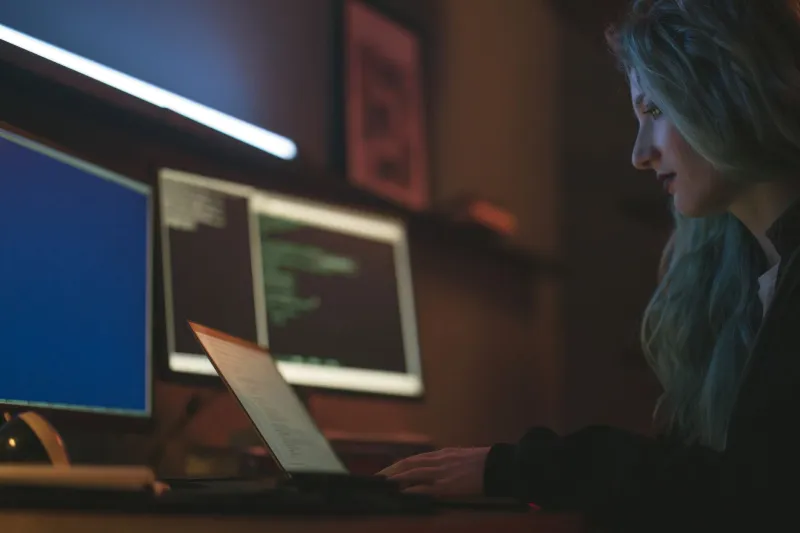
There's a moment a lot of crypto bettors know well. You sit down at your laptop after dinner, figure you'll play for an hour, and the next thing you know the birds outside are doing their thing and your phone says 4:47 AM. The chips — or in this case, the satoshis — are still moving. The roulette wheel is still spinning. Nothing about the platform has changed. No lights flickered. No announcer said the casino is closing. The game just kept going, because it always does.
That's not an accident. And it's worth understanding what's actually happening to your brain when you're deep in that loop.
The Architecture of Endless Access
Las Vegas figured out decades ago that removing clocks and natural light from casino floors extended play sessions. Crypto casinos have taken that logic and stretched it across an entirely different dimension — time itself.
A brick-and-mortar casino in Atlantic City or on the Strip operates within physical and regulatory constraints. Staff go home. Tables close. The building has a heartbeat. Online crypto platforms have none of that. They're stateless, borderless, and — crucially for US players — anonymous. There's no host who recognizes your face and quietly suggests you call it a night. There's no cocktail waitress whose shift ends and signals that time is moving. There's just the interface, humming along at 3 AM exactly as it was at 3 PM.
For American bettors who've grown up with the cultural shorthand of "last call" — that moment in bars and casinos that signals the night is wrapping up — crypto gambling removes a psychological anchor they didn't even know they were relying on.
Dopamine Doesn't Know What Time It Is
Here's where the neuroscience gets interesting. Your brain's reward system, specifically the dopamine pathways that light up during gambling, doesn't operate on a clock. What it does respond to is novelty, variable reward schedules, and the anticipation of outcomes. Slot machines and sports bets are almost engineered to exploit this. The near-miss, the sudden win, the next hand — these keep dopamine trickling in ways that override the brain's normal fatigue signals.
Now layer in sleep deprivation. Research consistently shows that even moderate sleep loss — say, staying up until 2 or 3 AM when your body wants to be down by midnight — impairs the prefrontal cortex. That's the part of your brain responsible for risk assessment, impulse control, and the ability to recognize when you're making a bad decision. In plain terms: the later you're up, the worse your judgment gets, and the less equipped you are to notice that your judgment is getting worse.
Crypto casinos don't cause sleep deprivation. But their always-on model means there's never a structural reason to stop. The platform won't make you stop. And at 3 AM, with your prefrontal cortex running on fumes, you're not exactly in peak condition to make that call yourself.
Anonymity Removes the Mirror
Traditional gambling environments have social friction built in. Other people can see you. A dealer watches your face. A friend at the table might say "hey, maybe that's enough for tonight." These aren't just social niceties — they're external feedback loops that can interrupt a behavioral spiral.
Crypto casinos, by design, strip most of that away. The anonymity that makes these platforms appealing — and genuinely valuable for privacy-conscious American players navigating a patchwork of state gambling laws — also removes those mirrors. Nobody's watching. Nobody knows it's you. And at 3 AM, alone with a glowing screen and a wallet that's seen better days, that anonymity can quietly become isolation.
This isn't an argument against anonymous crypto gambling. Privacy is a legitimate value, and there are real, practical reasons US players seek it out. But it's worth being honest about the tradeoff: when nobody knows who you are, nobody can notice when something's going sideways.
The Circadian Rhythm Nobody's Talking About
Your body runs on a roughly 24-hour internal clock — the circadian rhythm — that regulates everything from hormone production to core body temperature to, yes, risk appetite. Studies in behavioral economics have found that risk tolerance actually shifts across the day, typically peaking in the late evening and early morning hours when cognitive inhibition is naturally lower.
Translated to gambling: you are statistically more likely to make riskier bets at midnight than at noon, independent of how tired you are. The crypto casino's 24/7 availability means it's always there during your highest-risk windows, ready and waiting, with no friction between impulse and action. A sports bet that would've seemed questionable at 7 PM might feel like obvious value at 1:30 AM. The line hasn't changed. Your brain has.
Pattern Recognition Breaks Down in the Dark
One underappreciated effect of extended late-night sessions is what happens to pattern recognition — a skill bettors rely on constantly. Handicapping a game, reading odds movement, spotting value in a prop bet: all of these require sharp analytical thinking. Sleep-deprived brains don't just make worse decisions; they start seeing patterns that aren't there and missing patterns that are.
For sports bettors specifically, this can manifest as overconfidence in bad picks, misreading line movement, or convincing yourself that a cold team is "due." The gambler's fallacy is always lurking. It gets a lot louder after midnight.
So What Do You Actually Do With This?
None of this is a case for shutting down crypto casinos or surrendering the privacy benefits that make them genuinely useful for American players. It's more of a calibration check.
A few things that actually help:
Set a hard stop time before you start, not after. The moment you sit down, decide when you're done. Write it somewhere. The version of you that made that decision was more rational than the version who'll be tempted to override it at 2 AM.
Use session limits if the platform offers them. Some crypto casinos let you cap your session duration or deposit amounts. These tools exist for a reason. Use them.
Build your own last call. Since the platform won't give you one, create an external signal. An alarm. A rule about not betting after a certain hour. Some bettors keep a simple log — just noting the time when they started and stopped — which builds self-awareness over weeks.
Recognize that late-night losses hit differently. Not just financially. The emotional math of losing at 3 AM, exhausted and alone, is rougher than losing at 7 PM when you can just go for a walk. Factor that into how much you're willing to put on the table during those hours.
The Platform Won't Save You — But You Can
JokaBet Casino is built around the idea that crypto gambling should be bold, private, and empowering. That's real. Anonymous wagering with instant crypto payouts is a genuinely different — and for many players, genuinely better — experience than anything a traditional sportsbook or casino can offer.
But bold doesn't mean reckless. Playing anonymous doesn't mean playing unconscious. The 24/7 nature of crypto gambling is a feature, not a bug — until it isn't. The bettors who win consistently over time aren't just good at picking games or games. They're good at knowing when to walk away from a screen that never asks them to.